Energy | Mood | Hydration | Recovery
This month, I’m writing to you from a very different office.
Instead of my consulting room, I’m sitting beside the ocean, taking a much-needed wellness break. Watching the waves roll in has been the perfect reminder that sometimes the most productive thing we can do is pause, recharge, and look after ourselves.
Ironically, I chose to take this break during what has become one of my busiest times of the year.
Most people assume that winter is a quiet season for dietitians. After all, summer is when everyone is focused on losing weight and getting “beach ready” … right?
The reality couldn’t be more different.
Over the past few weeks, my clinic has been busier than ever with people who aren’t coming to see me because they want to lose weight. They’re coming because they simply don’t feel well.
- They’re exhausted, even after a full night’s sleep.
- Their mood feels flat.
- They’re struggling to concentrate.
- They seem to catch every cold that’s going around, and it takes them weeks to recover.
- They feel like they’re simply running on empty.
This is where nutrition goes so much further than calories or the number on the scale.
During the colder months, the right nutrients can make all the difference when it comes to your energy, immune system, mood, and recovery. The simple habits we often overlook or shrug off as insignificant become the very things that help our bodies stay resilient.
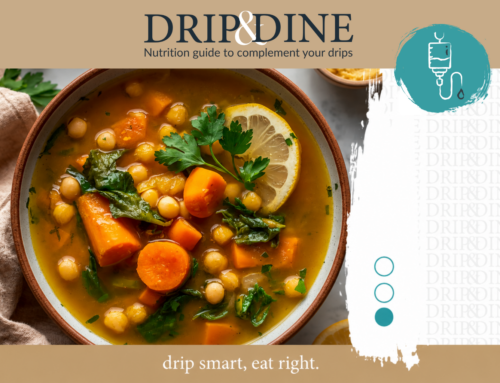
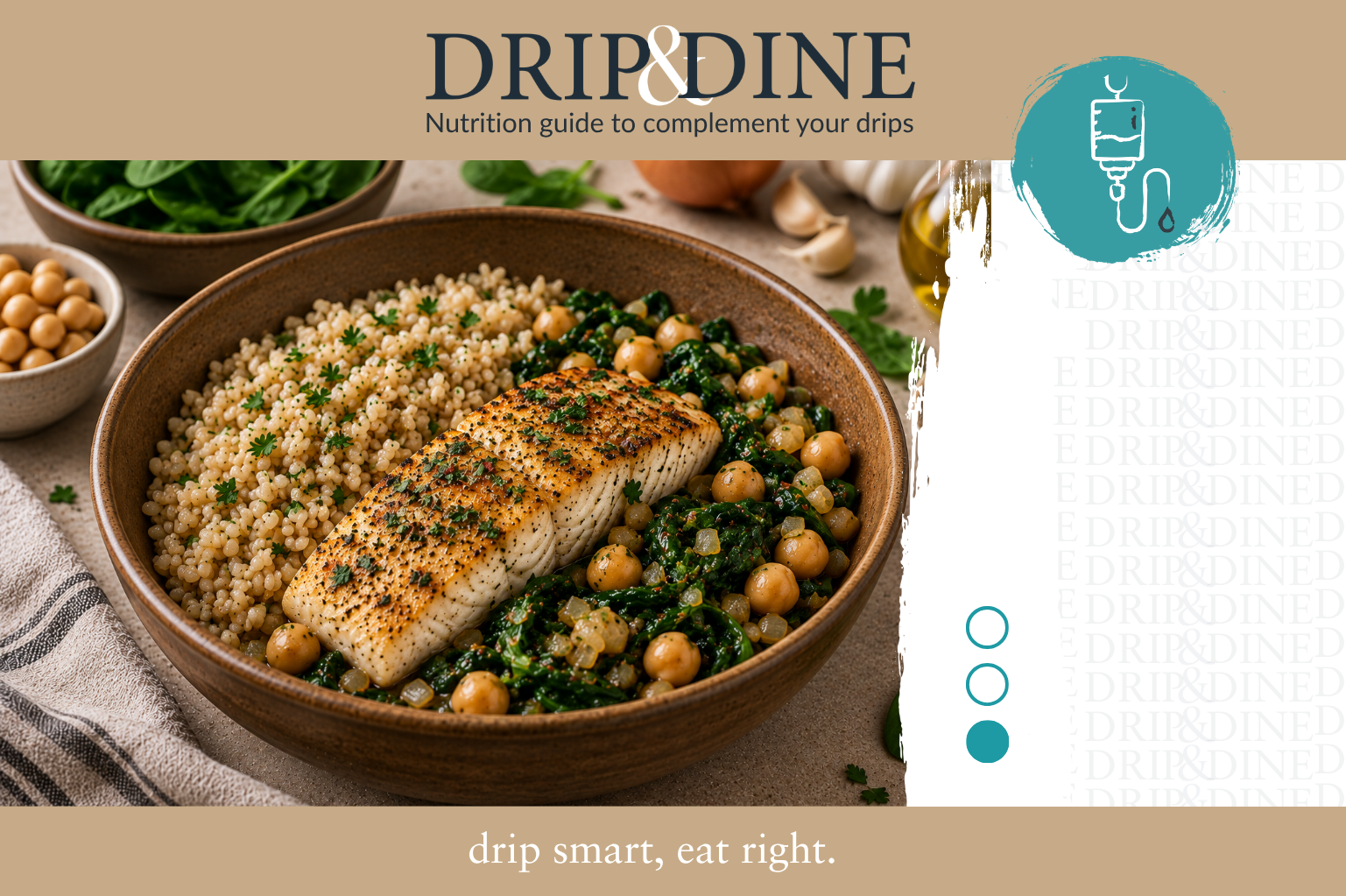
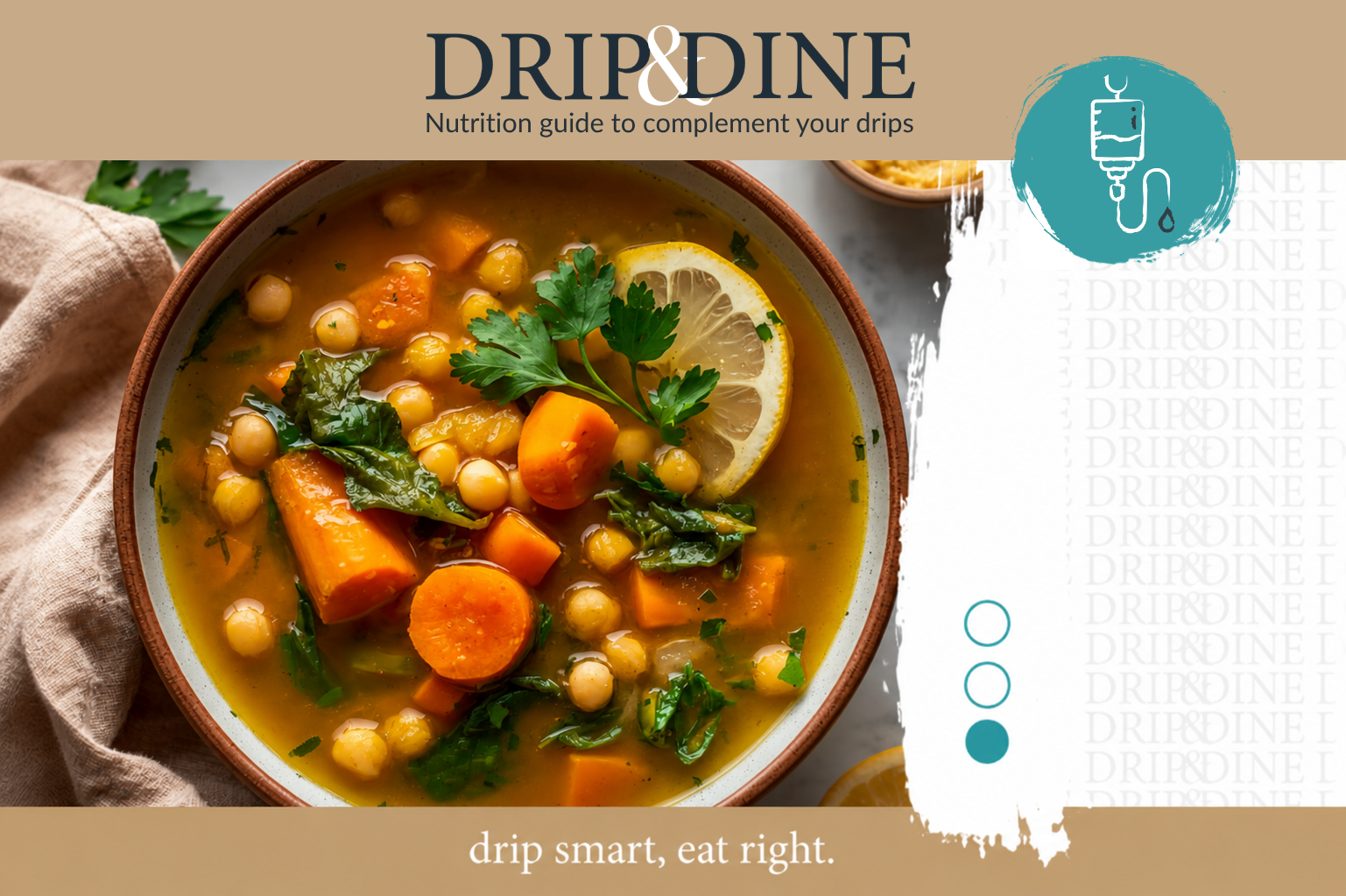
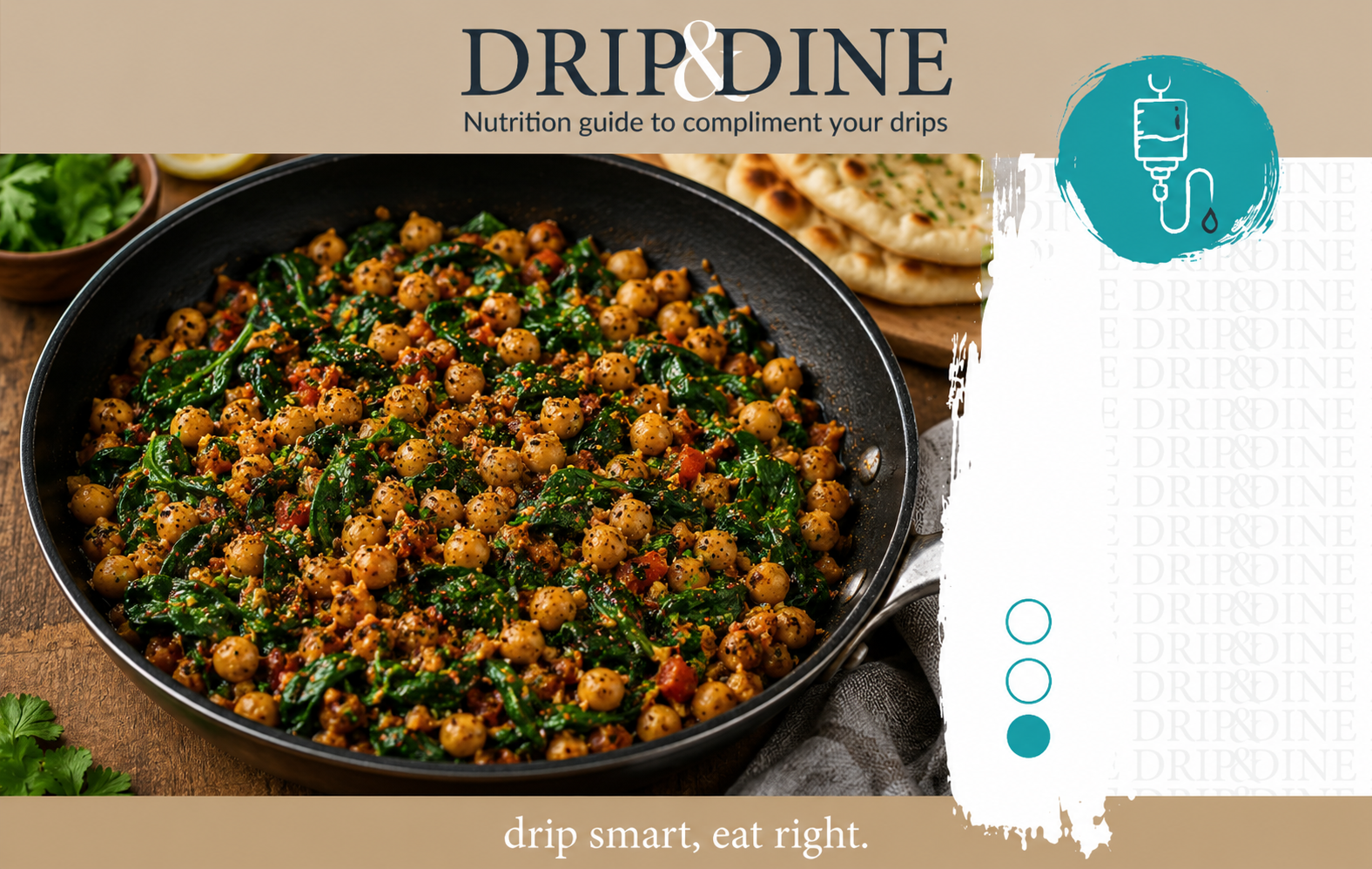
And that’s exactly what I’d like to talk to you about this month: The four pillars of winter wellness – Energy, Mood, Hydration and Immunity – along with practical nutrition strategies, targeted IV drip recommendations, and two nourishing winter recipes that you can start making straight away.
So, as I soak up the calm of the ocean (and reluctantly prepare to bid it farewell soon), I hope this month’s Drip & Dine leaves you feeling inspired to take care of yourself so that you may feel healthier, stronger, and more energised for the remaining part of winter.
Let’s dive in.
1. Energy
- Iron + Vitamin C together
Found in lentils, spinach, and pumpkin seeds with lemon.
Iron deficiency is one of the most commonly missed causes of winter fatigue.
- Don’t skip breakfast
Skipping breakfast can increase cortisol levels and set you up for energy crashes throughout the day.
- Vitamin D
Less sunshine often means lower Vitamin D levels, which may contribute to low energy. Consider supplementing with 3,000–4,000 IU daily during winter (under the guidance of your healthcare professional, of course).
- B-Vitamins
Found in eggs, legumes, and leafy greens.
These help power every energy-producing cell in your body.
The IV Bar Recommendation
Energy Boost or NAD+ Drip – ideal for deep, persistent fatigue that diet alone isn’t improving quickly enough.
2. Mood
- Eat oily fish 2–3 times a week
Sardines, mackerel, trout, or salmon.
Omega-3 fats are among the most evidence-based nutritional tools for supporting your mood.
- Feed your gut
Yoghurt, kefir, and sauerkraut.
These help to reinforce your gut microbiome, which plays an important role in serotonin production.
- Get outside
Even 15 minutes of midday sunshine can positively influence your brain chemistry.
- Enjoy dark chocolate (70%+) – yes, really!
Dark chocolate is a genuine mood food. Magnesium and polyphenols help support healthy neurotransmitter function.
The IV Bar Recommendation
Jetfuel Drip – B-Vitamins, Magnesium, Glutathione, and Vitamin C directly support the nervous system and allows for a more stable, healthier mood.
3. Hydration
- Drink water
Cold weather suppresses thirst, but your fluid needs don’t decrease. Set reminders to drink water, if needed.
- Herbal teas count
Rooibos, ginger, chamomile, and peppermint all contribute positively to your daily fluid intake.
- Eat your water
Soups, stews, fruit, and cooked vegetables all help to keep those hydration levels up.
- Warm lemon water
Start the day with warm lemon water to get a head start on your hydration.
The IV Bar Recommendation
Rehydration Drip – a fast and effective way to restore your hydration levels after illness, travel, or a week of poor intake.
4. Immunity
- Vitamin C
Citrus fruit, guava, kiwifruit, broccoli, and red peppers.
Include this in every meal to ensure your Vitamin C levels stay high enough for your body to fight off illness.
- Zinc-rich foods
Pumpkin seeds, eggs, red meat, legumes, and seafood.
These foods should be enjoyed daily to assist with proper immune cell function.
- Garlic and ginger
Add these generously to your winter meals. Both contain naturally occurring compounds that boost immune health.
- Prioritise rest (especially if you get sick)
Trying to push through often hampers recovery and prolongs sickness.
The IV Bar Recommendation
Immune Boost + Trace Elements Drip – high-dose Vitamin C combined with Zinc, Selenium, Copper, Manganese, and Chromium to assist with prevention and recovery alike.
“There’s no single supplement that replaces a strong nutritional foundation. Build that first, then layer in IV vitamin support when your body needs an extra push.”
Drip & Dine Recipes
Stay warm, eat well, and look after yourselves this winter.
Yours in health,
Leigh-Ann Silber RD(SA)
Registered Dietitian | IV Bar Wellness Partner
Want a personalised winter nutrition plan? I’m available online and in Sandton.
083 708 3337 | leigh-ann@silber.co.za